
Choosing how to support a light crane often starts with the building rather than the crane itself.
Floor space, available structure, headroom, machinery positions and access routes can all influence which installation method is practical. In some facilities, keeping the floor clear is the priority. In others, suitable overhead support may simply not be available.
When comparing ceiling-mounted and freestanding light cranes, these physical constraints can quickly narrow the options.
At NIKO, we consider how the crane needs to fit into the working environment as well as what it needs to lift.
Our light cranes and monorails are available with ceiling-mounted and freestanding arrangements, with load capacities up to 2,000 kg and bridge spans up to 10 metres.
Start with the Building, Not the Crane
One of the first questions is whether the existing building can provide suitable support for the proposed crane system.
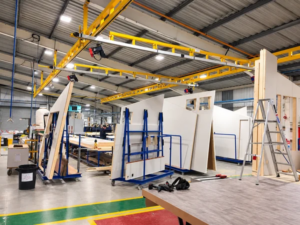
A ceiling-mounted crane uses suitable points within the building structure, which means separate support columns are not required within the working area.
A freestanding system uses its own crane support structure, so it does not depend on suitable overhead building support.
This is why the available light crane support options should be considered early in the planning process. The right arrangement depends on how the building, working area and crane need to work together.
Where an existing building structure is proposed for crane support, its suitability for the imposed loads should be confirmed by an appropriate structural engineer.
What If Floor Space Is Already Limited?
In a busy production area, support columns can create practical problems if they interfere with machinery, workstations, pedestrian routes or vehicle access.
Where the building structure is suitable, ceiling mounting can help keep more of the floor available for production.
This can be particularly useful for workstation crane installations where the crane needs to operate closely around existing machinery or assembly areas without introducing additional obstructions.
However, floor space is only part of the decision. The available structure above the working area and the headroom must also suit the proposed arrangement.
What If Suitable Overhead Support Is Not Available?
Not every factory or workshop is suited to a ceiling-mounted system.
The structure above the working area may not provide suitable support, or the available support points may not correspond with the area the crane needs to cover.
A freestanding light crane provides an alternative, using its own independent support structure, commonly referred to as ‘goalposts’, rather than relying on overhead building supports.
The support structure and fixing arrangement must also be suitable for the proposed installation.
The position of the support columns then becomes an important part of the design. We consider how they will relate to:
- Existing machinery
- Workstations
- Pedestrian access
- Vehicle movements
- Material flow
- The area the crane needs to cover
The aim is not simply to fit the structure into the available space. It needs to work with the way the production area is used.

How Does Headroom Affect the Configuration?
Available height can have a significant influence on crane design.
The crane structure, lifting equipment and load all occupy vertical space, so the arrangement needs to provide sufficient usable lifting height for the application.
This becomes particularly important in facilities with low ceilings or where services and existing equipment already occupy the space above the working area.
Our light crane systems include low-headroom configurations for applications where vertical space is restricted.
Considering headroom early can help avoid developing an arrangement that fits the floor plan but does not provide the required lifting height.
Could the Production Layout Change in Future?
A light crane may remain in service while the production environment around it changes.
Machinery can be repositioned, workstations can move and production areas can be reorganised. It therefore makes sense to consider likely future requirements when the system is first specified.
NIKO light cranes use modular construction and, depending on the system design and future requirements, suitable systems can be modified, extended or relocated.
That flexibility can be useful whether the crane is ceiling-mounted or freestanding, particularly where production requirements may change over time.
What Should You Check Before Choosing a Support Method?
Before choosing the support arrangement, it helps to look at the facility as a whole rather than considering the crane in isolation.
Useful questions include:
- Is suitable overhead building support available?
- Would support columns interfere with machinery or access?
- How much headroom is available?
- What area does the crane need to cover?
- Where does the load need to move?
- Could machinery or workstations move in future?
These considerations are important in any overhead crane installation because the lifting equipment needs to work with the building, workflow and available space.
The most suitable arrangement is therefore the one that supports the required lifting task without creating unnecessary restrictions elsewhere in the facility.
Discuss the Right Support Configuration for Your Facility
Choosing between ceiling-mounted and freestanding support depends on the building as much as the load.
If you are planning a new light crane installation, it is useful to have details of:
- The load weight and dimensions
- The area the crane needs to cover
- Available headroom
- Required direction of movement
- The proposed installation area
You can also explore our wider range of crane systems.
If you would like to discuss which support arrangement may suit your facility, discuss your light crane application with NIKO.
Frequently Asked Questions
What Is the Main Difference Between a Ceiling-Mounted and Freestanding Light Crane?
A ceiling-mounted light crane uses suitable existing building support, while a freestanding light crane uses its own independent support structure.
Which Light Crane Option Is Better Where Floor Space Is Limited?
Ceiling mounting can help keep the working floor clear where the existing building structure is suitable for the crane system.
When Should I Consider a Freestanding Light Crane?
A freestanding system can be considered where suitable overhead support is unavailable or where an independent structure better suits the working area.
The support structure and fixing arrangement must also be suitable for the proposed installation.
Does a Freestanding Light Crane Require Support Columns?
Yes. A freestanding light crane uses its own support structure, so column positions need to be planned around machinery, access and workflow.
Can NIKO Provide a Light Crane Where Headroom Is Restricted?
Yes. NIKO’s light crane range includes low-headroom configurations for applications where available vertical space is limited.
Can a NIKO Light Crane Be Changed If Production Requirements Alter?
NIKO light cranes use modular construction and, depending on the system design and future requirements, suitable systems can be modified, extended or relocated.